
Your 3 EV matches
Based on your answers — small family, 20–50 km daily, home charging, long range priority — we've shortlisted three cars that balance real-world range with family practicality inside the $40k–$75k bracket. All three have ISOFIX, strong safety ratings, and active local dealer networks.
★ Our recommendation
For your specific situation, the BYD Seal Premium is the strongest overall recommendation: it delivers the most range per dollar, fits the budget comfortably, and handles your daily charging routine without friction. If the budget can flex to $75k, the Hyundai Ioniq 5's 800V charging makes long road trips genuinely stress-free — well worth considering for a car the family will keep for a decade. The Tesla Model 3 Long Range is the right choice if Supercharger reliability and boot space are the deciding factors.
Side-by-side comparison
| BYD Seal | Hyundai Ioniq 5 | Tesla Model 3 | |
|---|---|---|---|
| Match score | 9.2 / 10 | 8.1 / 10 | 7.6 / 10 |
| Price | from $52,990 | from $76,200 | from $61,900 |
| Range | 490 km | 490 km | 660 km |
| DC charging | 150 kW · 27 min | 263 kW · 16 min | 250 kW · 16 min |
| Home charging | 13 hrs | 8.4 hrs | 8.2 hrs |
| Battery | 82.6 kWh | 80 kWh | 82 kWh |
| Seats / Boot | 5 · 400L | 5 · 520L | 5 · 681L |
| Tow rating | 750 kg | 1600 kg | 1000 kg |
| ISOFIX | Yes | Yes | Yes |
| Warranty | 8 yrs / 160k km | 8 yrs / 160k km | 8 yrs / 160k km |
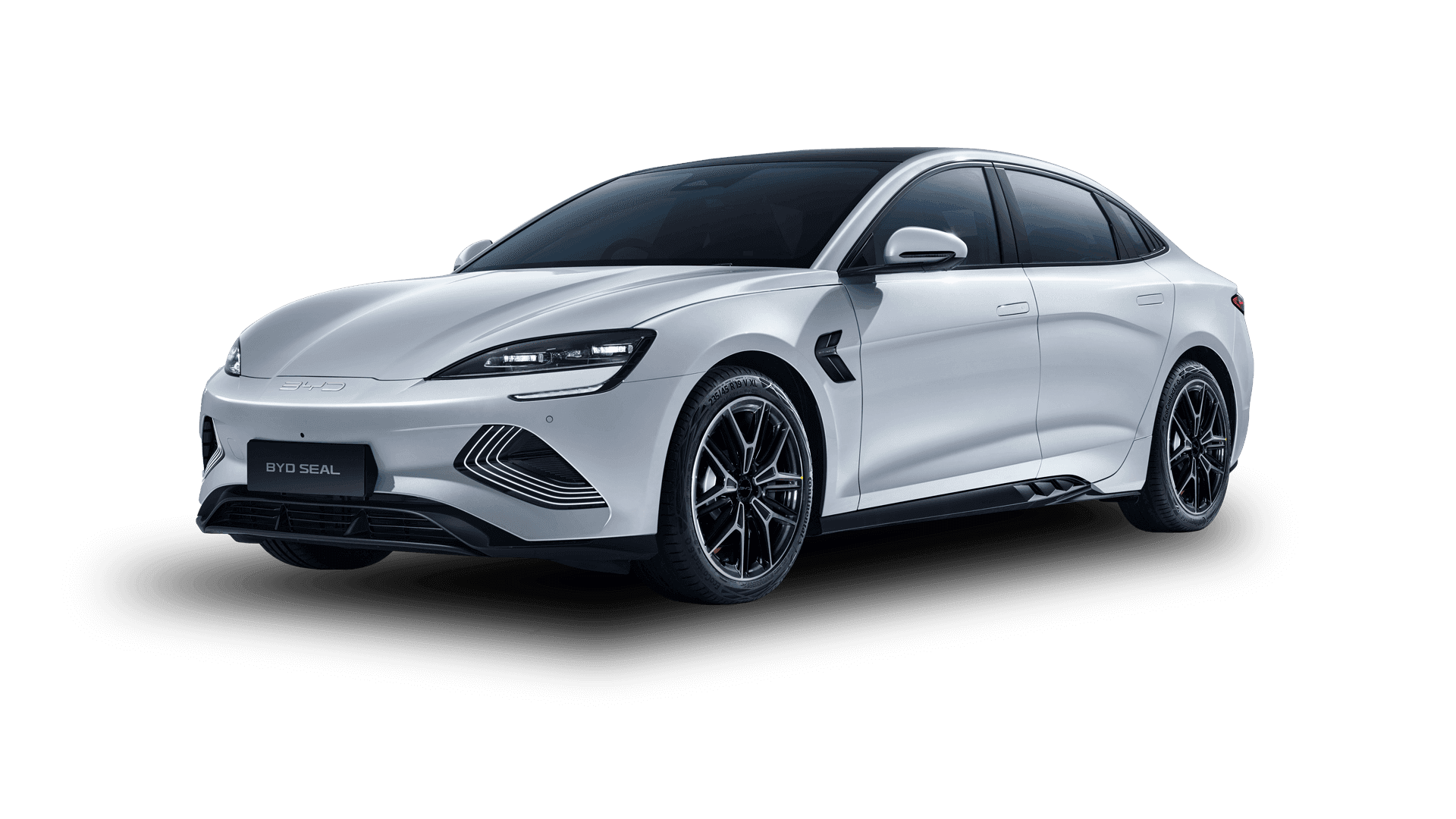
BYD · #1 match
Seal Premium
Best value long-range sedan for a small family
For your profile — small family, 20–50 km daily commute, home charging — the BYD Seal Premium is the standout recommendation. With a real-world range of 490 km, your daily trips barely register on the battery: you'd plug in at home perhaps twice a week and wake up to a full charge. The 82.6 kWh Blade battery is BYD's most mature cell chemistry, with independent testing showing minimal capacity loss beyond 200,000 km. The interior punches well above its price point: ventilated front seats, a 15.6-inch rotating infotainment display, and a premium Dynaudio 12-speaker system. Rear leg room is genuinely generous at 950 mm, which matters when the kids are old enough to need space. With ISOFIX anchors and a 750 kg tow rating, the Seal handles your family logistics without compromise. At $52,990, it's the most compelling value proposition in the mid-range sedan segment.
Works for you
- ✓490 km real-world range — 20–50 km/day barely touches it, charge twice a week
- ✓Blade battery: 8-year/160,000 km warranty, proven longevity
- ✓Generous rear legroom (950 mm) — room for kids to grow into
- ✓ISOFIX fitted, ventilated seats, premium audio — family features at a mid-range price
Worth knowing
- →DC charging capped at 150 kW — slower than Hyundai/Tesla rivals on highway stops
- →Boot is 400 L — slightly smaller than a traditional family sedan
💰 Estimated fuel savings
Your EV cost
~$53
per month
Petrol equivalent
~$175
per month
You save
~$122
per month
~$1,464 saved per year
Based on ~12,000 km/year, the Seal uses ~2,100 kWh annually. At 30¢/kWh home tariff that's ~$53/month. A comparable petrol sedan at 8.5 L/100km and $2.05/L costs ~$175/month.
Full specifications
| Price | from $52,990 |
| Real-world range | 490 km |
| DC charging | 150 kW — 27 min to 80% |
| AC home charging | 13 hrs (7 kW wallbox) |
| Battery | 82.6 kWh |
| Seats / Boot | 5 seats · 400L boot |
| Tow rating | 750 kg |
| ISOFIX | Yes |
| Battery warranty | 8 yrs / 160,000 km |
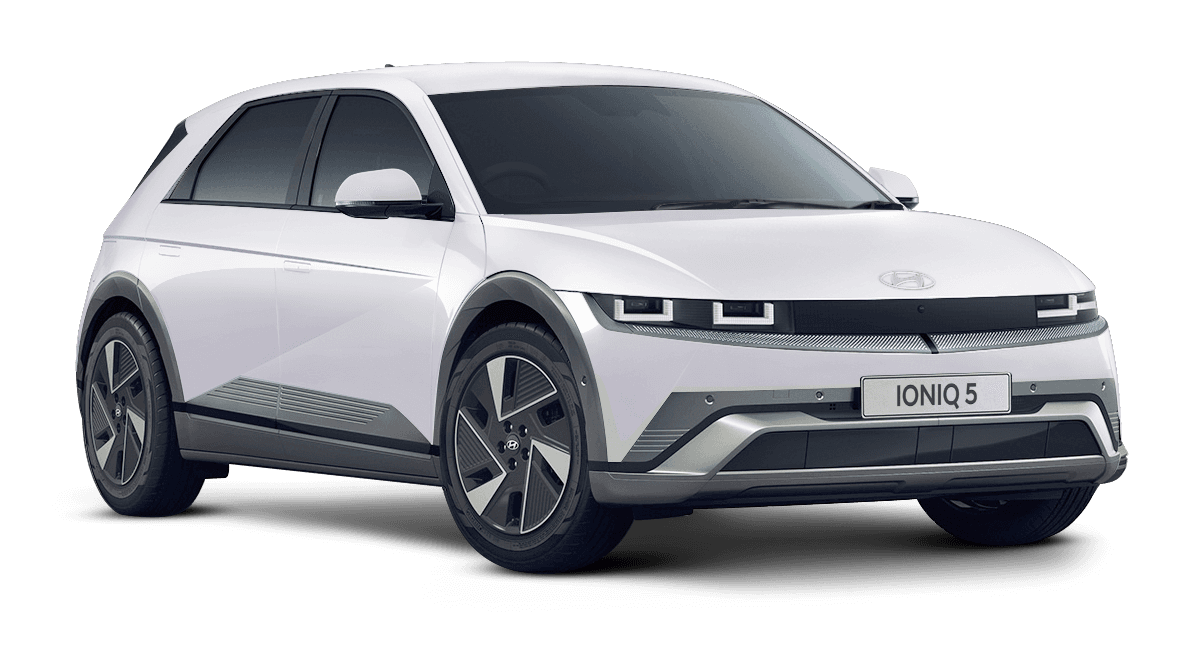
Hyundai · #2 match
Ioniq 5 RWD
Ultra-fast charging and serious towing for growing families
The Ioniq 5 RWD sits above your stated $40k–$60k ceiling, but the 800V architecture makes a compelling case for stretching the budget. On a 350 kW Chargefox Ultra-Rapid charger, it goes from 10% to 80% in just 16 minutes — less time than a coffee stop. For school holiday road trips, that's transformative. The flat-floor cabin (no transmission tunnel) means genuine space for three in the rear, and the 520 L boot handles a twin pram with room for shopping. The 1,600 kg tow rating is also the highest of the three shortlisted cars, useful if a trailer or small boat ever enters the picture. Hyundai's dealer network is well established across Australia, which matters for service confidence. At $76,200, it's a bigger commitment, but the 800V charging tech is genuinely future-proof for a family car likely to be kept for 8–10 years.
Works for you
- ✓800V ultra-fast charging: 10→80% in 16 minutes — road trips become stress-free
- ✓1,600 kg tow rating — highest of the three, room to grow into
- ✓Flat floor with 520 L boot: easy with prams, bags, and kids' gear
- ✓Hyundai's established AU service network — confident ownership experience
Worth knowing
- →Exceeds the $60k budget ceiling — worth exploring driveaway pricing or demo stock
- →Bulkier footprint than the Seal — tighter in narrow car parks
💰 Estimated fuel savings
Your EV cost
~$51
per month
Petrol equivalent
~$185
per month
You save
~$134
per month
~$1,608 saved per year
~2,050 kWh/year at your usage. At 30¢/kWh home tariff that's ~$51/month. A comparable petrol SUV at 9 L/100km and $2.05/L costs ~$185/month.
Full specifications
| Price | from $76,200 |
| Real-world range | 490 km |
| DC charging | 263 kW — 16 min to 80% |
| AC home charging | 8.4 hrs (7 kW wallbox) |
| Battery | 80 kWh |
| Seats / Boot | 5 seats · 520L boot |
| Tow rating | 1600 kg |
| ISOFIX | Yes |
| Battery warranty | 8 yrs / 160,000 km |
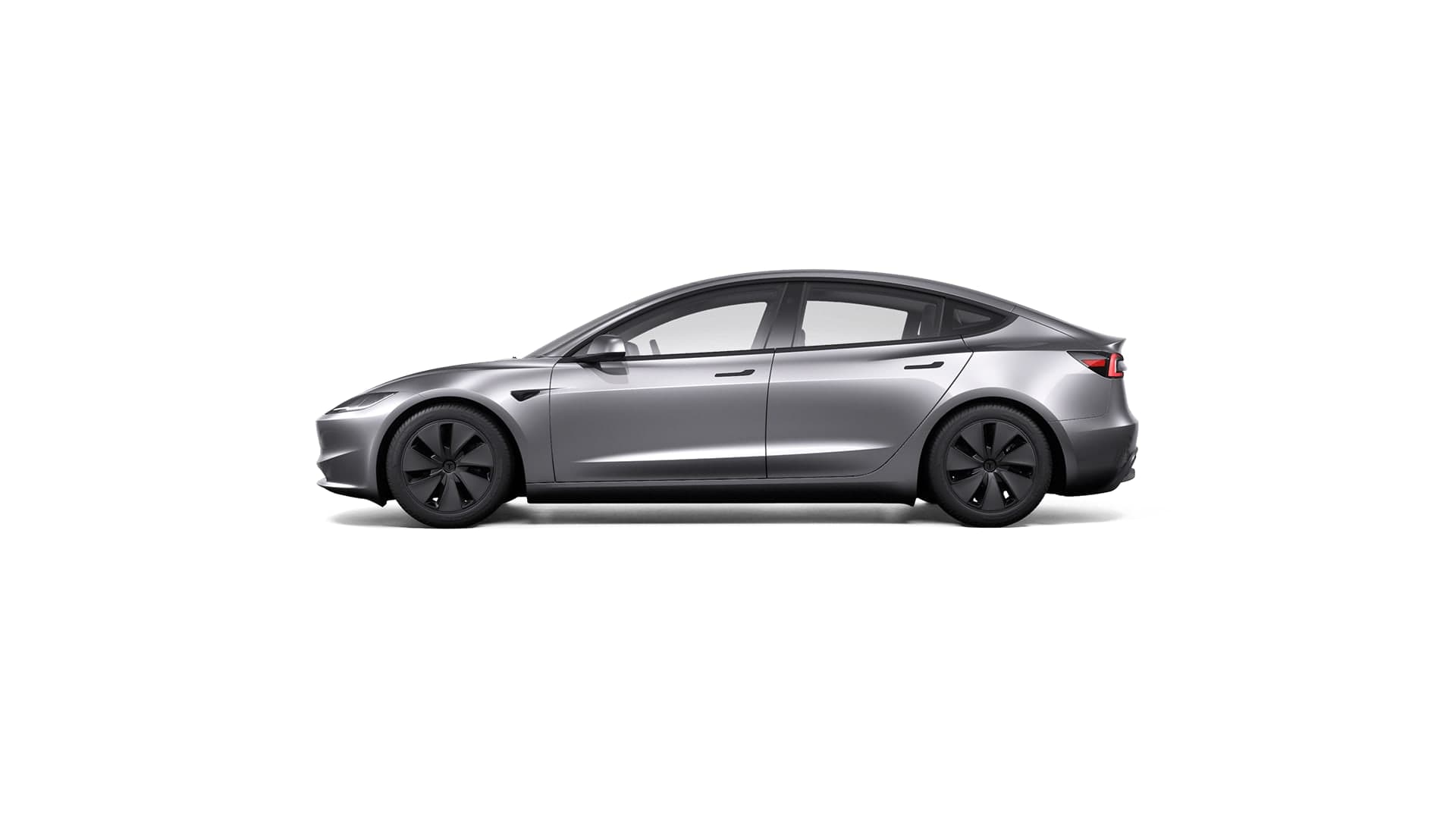
Tesla · #3 match
Model 3 Premium LR RWD
Longest range + best charging network in Australia
The Model 3 Long Range RWD offers something the others can't match: 660 km of real-world range and seamless access to Australia's most reliable fast-charging network. For your 20–50 km daily commute, a single charge at home could last over two weeks — effectively removing range anxiety entirely. Tesla's Supercharger network has 140+ stations nationally, with consistently higher uptime and faster speeds than third-party networks. The 681 L boot (front and rear combined) is the most practical of the three, easily fitting a twin pram and luggage. The 2024 Highland refresh added genuine rear comfort: a rear entertainment screen, improved acoustic glass, and ambient lighting that makes the back seat feel like less of an afterthought. At $61,900, it sits just above your stated ceiling but competitive against the Ioniq 5. The minimalist all-screen interior is the key personal preference question: some families love it, others miss physical climate controls.
Works for you
- ✓660 km real-world range — a fortnight of your commute on a single home charge
- ✓Australia's most reliable Supercharger network: 140+ stations, fastest average speeds
- ✓681 L combined boot — best cargo capacity of the three shortlisted cars
- ✓Rear entertainment screen and improved acoustics (2024 Highland) — back-seat upgrade
Worth knowing
- →All controls via touchscreen — no physical buttons for climate or volume (personal preference)
- →Slightly above the $60k target — worth checking Tesla's current drive-away pricing
💰 Estimated fuel savings
Your EV cost
~$52
per month
Petrol equivalent
~$175
per month
You save
~$123
per month
~$1,476 saved per year
~2,080 kWh/year at your usage. At 30¢/kWh home tariff that's ~$52/month. A comparable petrol sedan at 8.5 L/100km and $2.05/L costs ~$175/month.
Full specifications
| Price | from $61,900 |
| Real-world range | 660 km |
| DC charging | 250 kW — 16 min to 80% |
| AC home charging | 8.2 hrs (7 kW wallbox) |
| Battery | 82 kWh |
| Seats / Boot | 5 seats · 681L boot |
| Tow rating | 1000 kg |
| ISOFIX | Yes |
| Battery warranty | 8 yrs / 160,000 km |
What's next?
🔄 Try different answers
Changed your budget or priorities? Run the quiz again for a fresh shortlist.
Run the quiz againYour EV buying guide
What to know before you buy
🚗Before you test drive
Book at least two or three
Don't stop at one. The difference between brands is significant — software, ride quality, and cabin feel vary far more than between petrol cars.
Test it in your actual life
Replicate your real routine: school run, the car park you use, your driveway. Tight turning circles, wallbox port location, and boot access all matter day-to-day.
Sit in the back seat
Especially if you have kids. Some EVs sacrifice rear headroom for aerodynamics (Ioniq 6, Model 3). Check headroom, legroom, and middle seat comfort.
Ask about the charging plan
Find out if the dealer offers complimentary wallbox installation or a home energy assessment. Several brands include it — it's worth asking before you sign.
🤝Negotiating your EV
EV pricing is less flexible — but not fixed
Tesla and BYD have largely moved to fixed pricing, but most other brands still negotiate. Demo stock, end-of-quarter, and slow-moving variants are your best leverage points.
Driveaway vs. list price
Always ask for the full driveaway price upfront — CTP, stamp duty, and dealer delivery can add $3k–$6k. Compare apples to apples across brands.
Check state and federal incentives
Some states still offer stamp duty exemptions or rebates for EVs. The federal FBT exemption for novated leases applies to eligible EVs under the LCT threshold (~$89k). These can be worth thousands — confirm current eligibility before purchase.
Ask what's included
Home charging cable, floor mats, first service, extended warranty — dealers sometimes bundle these rather than discount on price. It's worth asking.
💳Financing considerations
Novated lease — often the best deal if you're employed
Eligible plug-in EVs under the luxury car tax threshold are exempt from Fringe Benefits Tax (FBT), which makes novated leasing unusually attractive right now. You pay for the car, running costs, and insurance pre-tax — effectively getting a 20–40% discount depending on your income bracket. It's worth getting a quote even if you've never leased before.
Get a free novated lease quote →Finance (loan)
If you're buying outright with a loan, look at green car loans before accepting dealer finance. Lenders like Plenti, Latitude, and Macquarie offer EV-specific rates typically 1–2% lower than standard car loans. Always get pre-approval so you negotiate on the car price, not the monthly repayment.
Cash
Paying cash gives you the cleanest negotiating position and no interest costs. The trade-off is opportunity cost — that capital could be earning returns elsewhere. If you have a mortgage, check whether paying down your home loan and financing the car is actually cheaper overall.
Car insurance — budget higher than petrol
EVs generally cost more to insure than equivalent petrol cars. Repair costs are higher (specialised technicians, battery assessments after any incident), and some insurers are still pricing in unfamiliarity. Get quotes from at least three insurers before you buy — budget roughly 20–40% more than you'd expect for a comparable petrol car. Some insurers (e.g. NRMA, Budget Direct, Tesla Insurance for Tesla owners) are building EV expertise and tend to be more competitive.
⚡Life with an EV — what to expect
Tyres wear faster
EVs are heavier and deliver instant torque, which accelerates tyre wear — especially on the front axle of FWD models. Budget for tyre replacements more frequently than a petrol car, and check that your chosen tyre is EV-rated (look for 'EV', 'HL', or low rolling resistance ratings).
Brake pads last 2–3× longer
Regenerative braking does most of the slowing down, so physical brake pads barely get used in normal driving. Many EV owners replace them at 150,000+ km instead of the usual 50,000–70,000 km.
No oil changes — ever
No engine oil, no transmission fluid changes, no spark plugs. Servicing is mostly software checks, brake fluid, cabin air filter, and tyre rotation. Annual service costs are typically 30–50% lower than an equivalent petrol car.
Charge to 80% for daily use
Most manufacturers recommend staying between 20–80% for regular use — it extends battery longevity. Save 100% charges for long trips. Your car's app can automate this.
The home wallbox changes everything
A 7 kW AC wallbox (installed cost ~$1,200–$1,800) charges most EVs overnight from near-empty. Once you're used to waking up to a full battery, you won't understand how you lived differently. Get quotes before delivery.
Software updates improve your car over time
Most modern EVs receive over-the-air (OTA) software updates that add features, improve efficiency, and fix issues — the same way your phone updates. Your car on day 500 is genuinely better than it was on day 1.
General information only
This report is generated for general informational purposes and does not constitute financial, legal, or professional advice. Vehicle specifications, pricing, and availability are subject to change — always verify current details directly with the manufacturer or dealer before making a purchase decision. Fuel savings estimates are indicative only, based on publicly available average electricity and petrol prices in Australia at time of publication, and will vary based on your actual usage, tariff, and driving conditions.
What EV does not receive referral fees or commercial incentives from any vehicle manufacturer or dealer. We may earn a referral fee if you use a novated lease provider linked from this report. This does not affect the advice given or the vehicles recommended to you.